




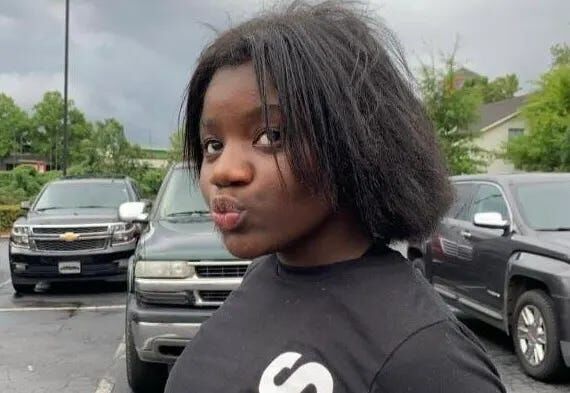
Juliana Nzita was sixteen years old when she went missing from Charlotte on the 28th of April, and she had been in the United States only a short time, having come from the Democratic Republic of the Congo to a city where almost nobody knew her name. For ten days, her family searched while posts circulated online asking anyone who had seen her to come forward, and then on the 8th of May, a community volunteer named Kenneth Tolbert found her body hanging from a tree on the grounds of the United House of Prayer for All People on West Sugar Creek Road. The Charlotte-Mecklenburg Police Department ruled her death a suicide almost as soon as they got there.

According to The North Carolina Beat, which broke the story and obtained the police report, the scene included a rope tied high in the tree and a small blue chair underneath it, with Juliana’s feet still touching the ground. For the police ruling to be correct, a sixteen-year-old girl who had been missing for ten days, in a city she barely knew, would have had to get hold of a rope and a chair, carry both of them across Charlotte to the property of a church she had no obvious connection to, and manage all of it without a single person noticing a teenage girl walking around with a length of rope and a chair under her arm. This is even more unusual when you consider that there is no video footage of her walking around the area.
Below is an image of the place where she was found.
- Buy All-American!
- Bring health and vitality back to your body with these non-transdermal patches
- Get your Vitamin B17 & Get 10% Off With Promo Code TIM
- How To Protect Yourself From 5G, EMF & RF Radiation - Use promo code TIM to save $$$
- The Very Best All-American Made Supplements On The Market
- Grab This Bucket Of Heirloom Seeds & Save with Promo Code TIM
- Here’s A Way You Can Stockpile Food For The Future
- Stockpile Your Ammo & Save $15 On Your First Order
- Preparing Also Means Detoxifying – Here’s One Simple Way To Detoxify
- The Very Best Chlorine Dioxide
- All-American, US Prime, High Choice Grass-Fed Beef with NO mRNA, hormones or antibiotics... ever!

One of the church members at the scene can be heard on Tolbert’s video saying they had been in that same spot the day before and had seen nothing, which would mean the body appeared in the narrow window right before it was found, ten days after she vanished. This situation is definitely weird enough to deserve an investigation, but the cops closed the case fast, and by their own account, they had not even reached Juliana’s family for comment by the time the death was already classified as a suicide. The church said nothing, and there was no public account of a note, a history, or anything else that would explain why a girl who survived the road from the Congo to North Carolina would end her life this way, in this place, ten days after disappearing.
These kinds of situations happen a lot more often than most people realize. In September of 2025, twenty-one-year-old Demartravion Reed, a college student everyone knew as Trey, was found hanging from a tree on the campus of Delta State University in Mississippi, roughly fifty miles from the stretch of the Tallahatchie River where Emmett Till’s body surfaced in 1955. He was one of at least 9 Black men who had been found hanging from trees in the past 5 years. The Bolivar County coroner ruled it a suicide within a day, and the state medical examiner agreed. Only after a national outcry and pressure from members of Congress did the case files end up with the FBI. Eleven years before that, in Bladenboro, North Carolina, seventeen-year-old Lennon Lacy was found hanging from a swing set by a dog leash and a belt his family said were not his, wearing shoes a size and a half too small that also were not his, on the morning of the day he was supposed to play his first varsity football game, a game he had been excited about, with his uniform already laid out at home. He had been dating a white woman whose neighbors reportedly warned her that the relationship was wrong. The state ruled it a suicide, the NAACP brought in its own pathologist, who found that the mechanics of the hanging did not add up, the FBI eventually investigated, and the federal government closed the case, saying it found no evidence of homicide without ever resolving a single one of the things that did not add up.
While most of these cases go unsolved, it’s not unheard of for these cases to turn out as suicide. When Malcolm Harsch, a thirty-eight-year-old Black man, was found hanging from a tree near the public library in Victorville, California, in the summer of 2020, his family feared he had been lynched, and feared even more that the authorities would rush to call it a suicide to make the whole thing disappear. Then the San Bernardino County Sheriff’s Department showed them surveillance footage of what had actually happened, and after watching it the family said publicly that they were convinced Malcolm had taken his own life. The Harsch family got something the Nzita family has not been offered, which is an investigation that took their suspicion seriously.
These cases stand out because of how they echo a very disturbing part of US history, but lynchings nowadays happen most frequently by gun. When racists hunt and kill a Black person today, they overwhelmingly do it with a gun, the way Travis McMichael and his father Gregory chased Ahmaud Arbery through their Georgia subdivision in their trucks in 2020 and shot him dead with a shotgun while a neighbor filmed the whole thing, a killing Arbery’s own family called a modern-day lynching and that a jury eventually treated as one when it convicted all three men of murder and then of federal hate crimes. As with the unsolved deaths, the local police sat on the case for more than two months and made no arrests. Eventually, the video leaked, and public outrage forced their hand, but things could have gone much differently if that had never happened.
Even more common is the steady stream of police killings of young Black men, where families are even less likely to find justice. While not all of these cases can be considered lynchings, many of them should, and even among those murders that aren’t directly motivated by race, many are influenced by the unconscious racialized bias that many police officers and Americans in general are socialized with.
Article posted with permission from John Vibes